The curve · Stage 3 · On the new curve
Deliver it, prove it. “How do we make it land, and show it worked?”
You know the direction. Now it has to land, show value, and you need the skills for what comes next. This is where governance, operating models and benefits tracking do the work.
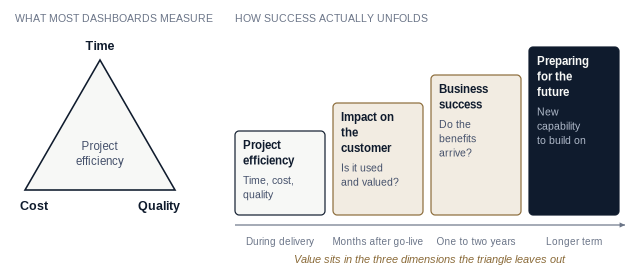 Paper · the one to read firstDelivering for valueMany programmes deliver everything they promised and still fail to create value. The fix is to plan, govern and measure delivery around outcomes, not outputs.Read it
Start here · free and private
Check where you stand
CheckTransformation MaturityYour transformation maturity level, the gaps holding change back, and where to start.5 min · for your organisationCheckThe 60-second pulseFive honest answers, for you or your organisation. See how close the bend is.1 min · for you or your organisation All checks and plansRead
Papers and notes for this stage.
NoteBenefits don't realise themselvesMost programmes stop measuring at go-live, which is exactly when the benefits are meant to start. Someone has to own them after the project team has gone.2 min readNoteGood programme governance makes decisions fasterMost programme governance is designed to review. The useful kind is designed to decide, and makes it obvious who decides what.3 min readNoteMost steering committees watch. Few of them steer.A steering committee that only receives updates is an expensive audience. Rebuild the pack around the decisions it needs to make.3 min readNoteStart by stopping: the first 90 days of a transformation set its ceilingWhat leaders stop, fund and say in the first quarter decides how far people believe the change can go.2 min readNoteTwenty minutes a day: how I built my 12-week planYou do not need a sabbatical to keep up. You need a small target for each weekday and one real task each week.2 min read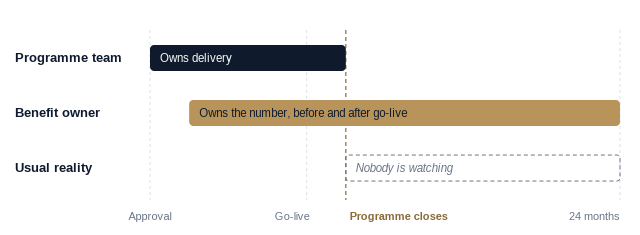 PaperRealising valueGo-live is the point at which benefits are meant to start, and the point at which most organisations stop looking. The last link in the value chain needs an owner, honest measures and the patience to keep watching.Paper 4 · 5 min summary
Watch
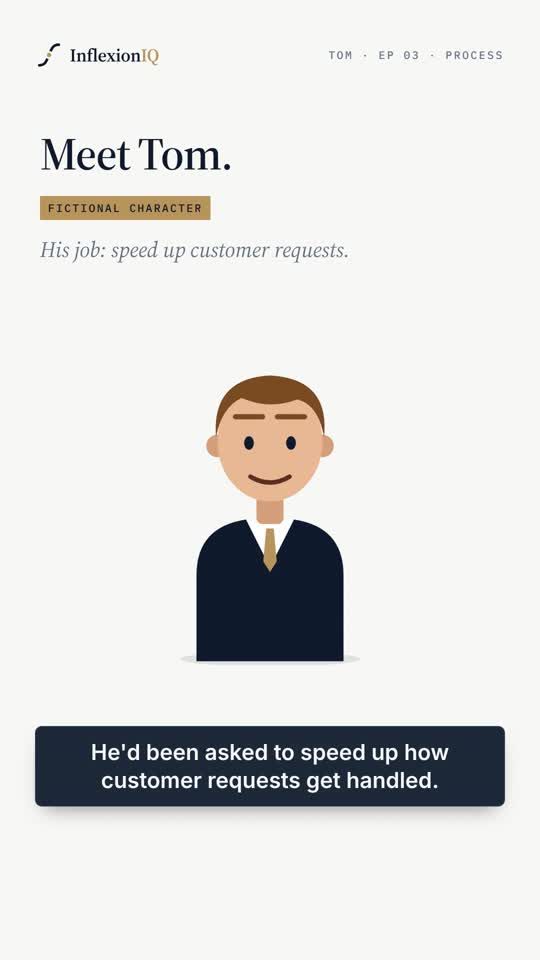
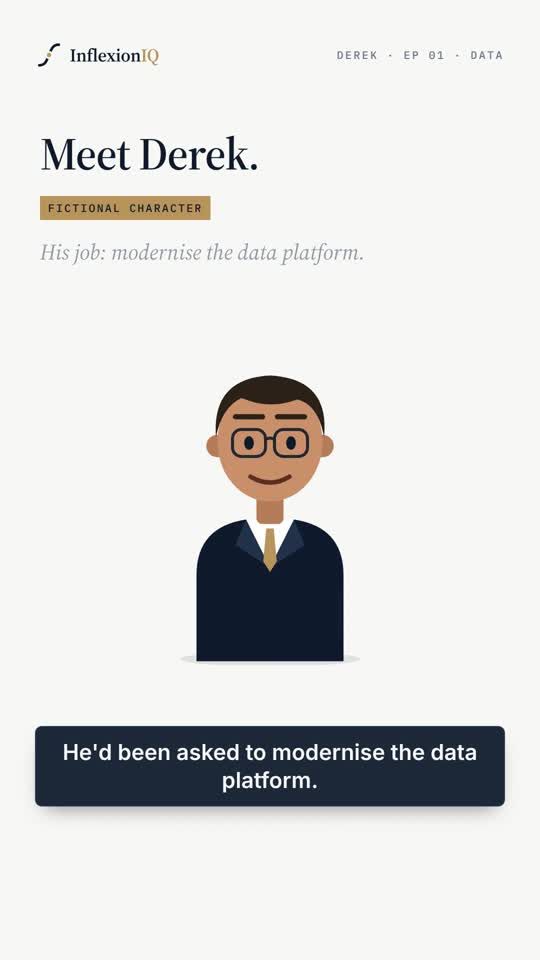
Two minutes or less, each with a free template.
Do the work
Step-by-step guides, each with the template ready.
GuideHow to design a processMost process problems are not inside the steps. They are in the gaps between them, where work waits for someone to pick it up.6 min readGuideHow to design an operating modelAn operating model is not an org chart. It is the set of choices that turns a strategy into how work actually gets done, every day.7 min read
Templates
Excel, PowerPoint and Word. Free, no sign-up wall.
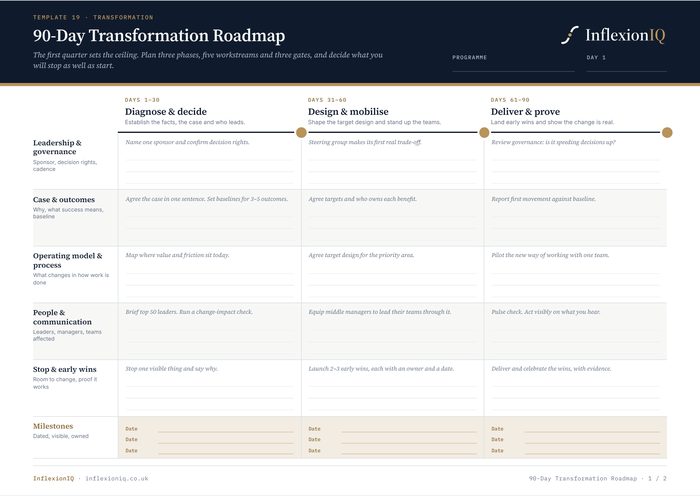 Template90-Day Transformation RoadmapPlan the first quarter of a change programme across five workstreams, with three gates that force real decisions.PowerPoint and PDF · free
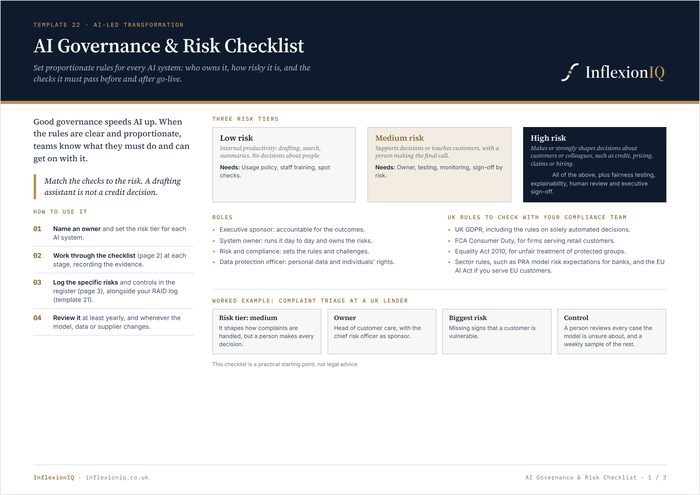 TemplateAI Governance & Risk ChecklistSet proportionate rules for every AI system, covering who owns it, how risky it is, and the checks it must pass before and after go-live.Excel and PowerPoint · free
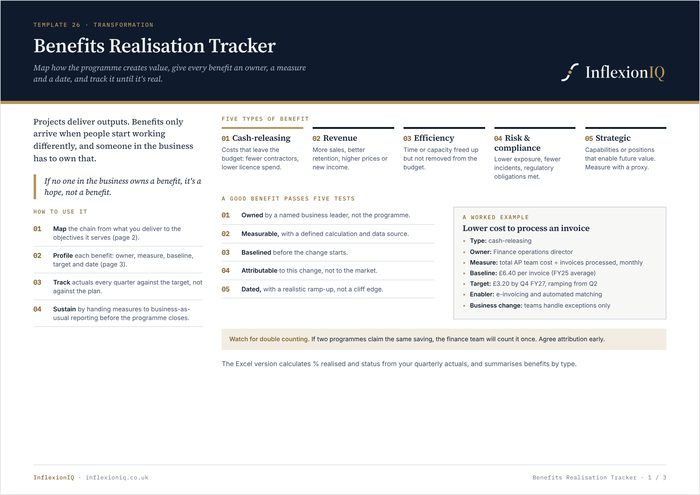 TemplateBenefits Realisation TrackerMap how the programme creates value, give every benefit an owner, a measure and a date, and track it until it is real.PowerPoint and Excel · free
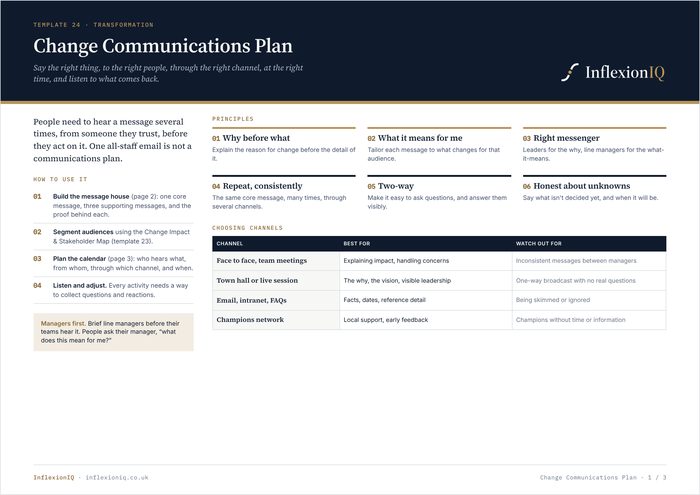 TemplateChange Communications PlanPlan who hears what, when and how, and listen to what comes back.PowerPoint and Excel · free
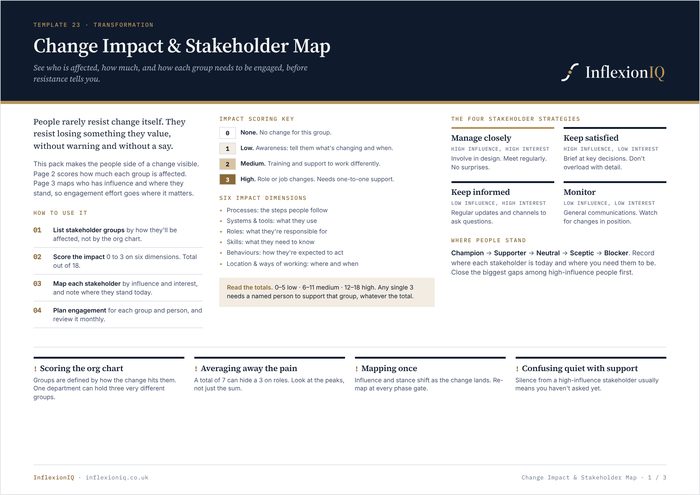 TemplateChange Impact & Stakeholder MapSee who is affected, how much, and how each group needs to be engaged, before resistance tells you.PowerPoint and Excel · free
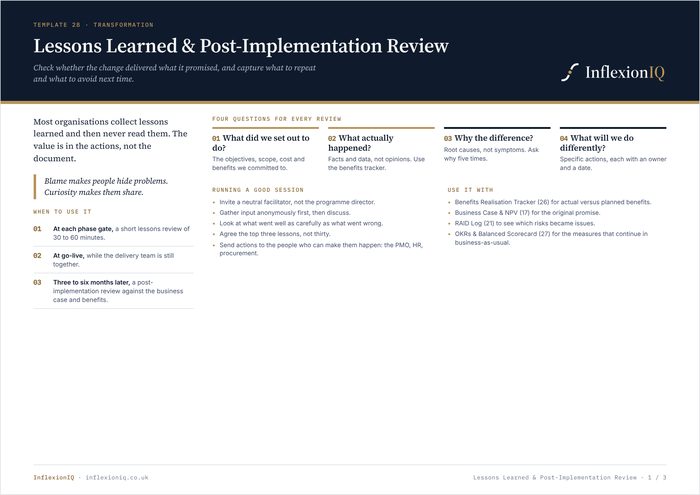 TemplateLessons Learned & Post-Implementation ReviewCheck whether the change delivered what it promised, and capture what to repeat and what to avoid next time.PowerPoint and PDF · free
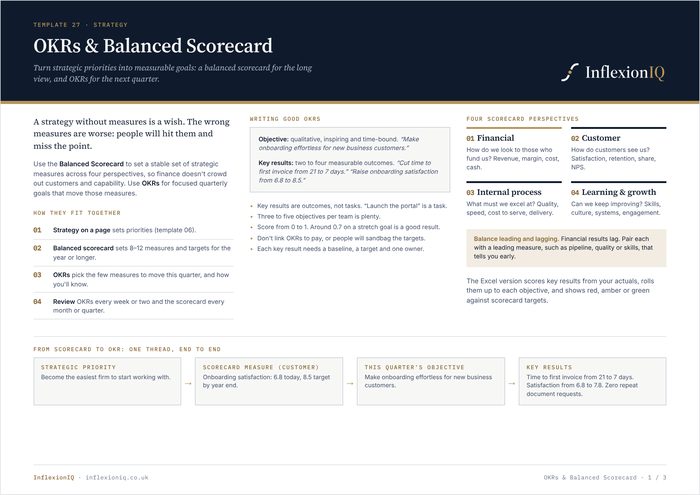 TemplateOKRs & Balanced ScorecardTurn strategic priorities into measurable goals, with a balanced scorecard for the long view and OKRs for the next quarter.PowerPoint and Excel · free
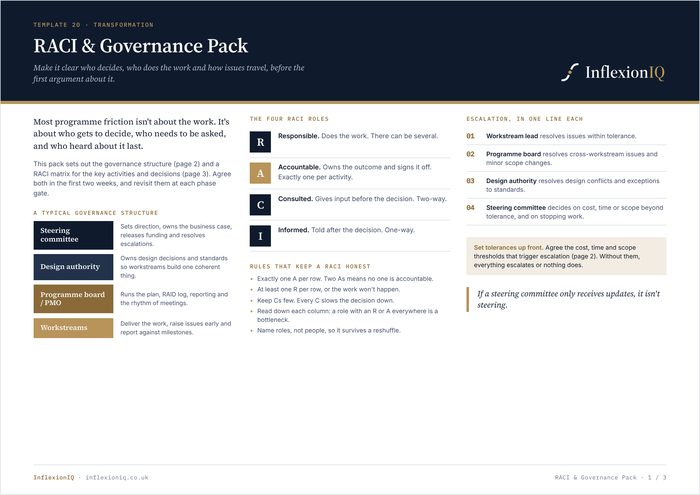 TemplateRACI & Governance PackMake it clear who decides, who does the work and how issues travel, before the first argument about it.PowerPoint and Excel · free
Build the skill
Twelve light weeks, about twenty minutes a day.
12-week planAI Governance & RiskSet up AI governance that manages real risks without stopping good ideas.
- Wk 1Why AI governance matters
- Wk 6Who decides what
- Wk 12Make it stick
- Wk 1What business architecture is
- Wk 6Processes, when they help
- Wk 12Tell the story
- Wk 1Why data architecture matters
- Wk 6Quality you can measure
- Wk 12Tell the data story