VRIO Capability Analysis
Four questions that separate the capabilities that set you apart from the ones that only keep you in the game.
Where it fitsStage 1 of 7 · Diagnose: Where are we, and what is the real problem?
What it is
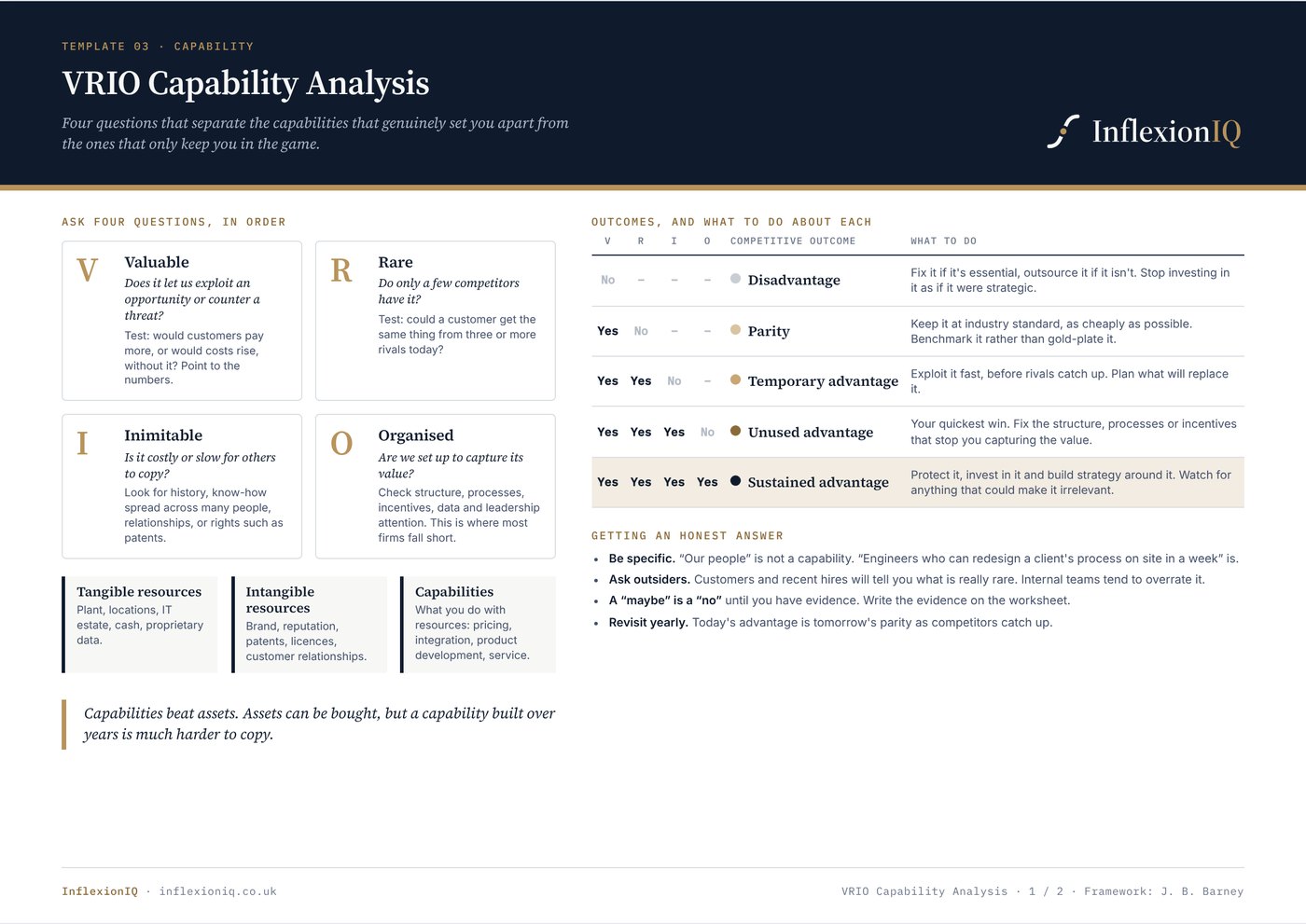
A structured way to test each of your resources and capabilities against four questions. Is it Valuable? Is it Rare? Is it costly to Imitate? Are you Organised to capture its value? The answers place each one in one of five outcomes, from competitive disadvantage to sustained advantage, and each outcome comes with a recommended move. The Excel version fills in the outcome and move as you answer.
Why use it
Leadership teams often overrate what makes them different and under-invest in organising around it. VRIO asks for evidence. It is especially good at finding unused advantages: capabilities that are valuable, rare and hard to copy, but that the organisation is not set up to use. These are often the quickest wins in a strategy.
How to use it
- List the eight to twelve resources and capabilities your leadership team thinks matter most. Be specific: 'our buying team's supplier relationships in Portugal', not 'our people'.
- Ask the four questions in order for each one: is it valuable, rare, hard to imitate, and are we organised to use it?
- Stop at the first 'no'. That tells you the outcome, from competitive disadvantage to sustained advantage.
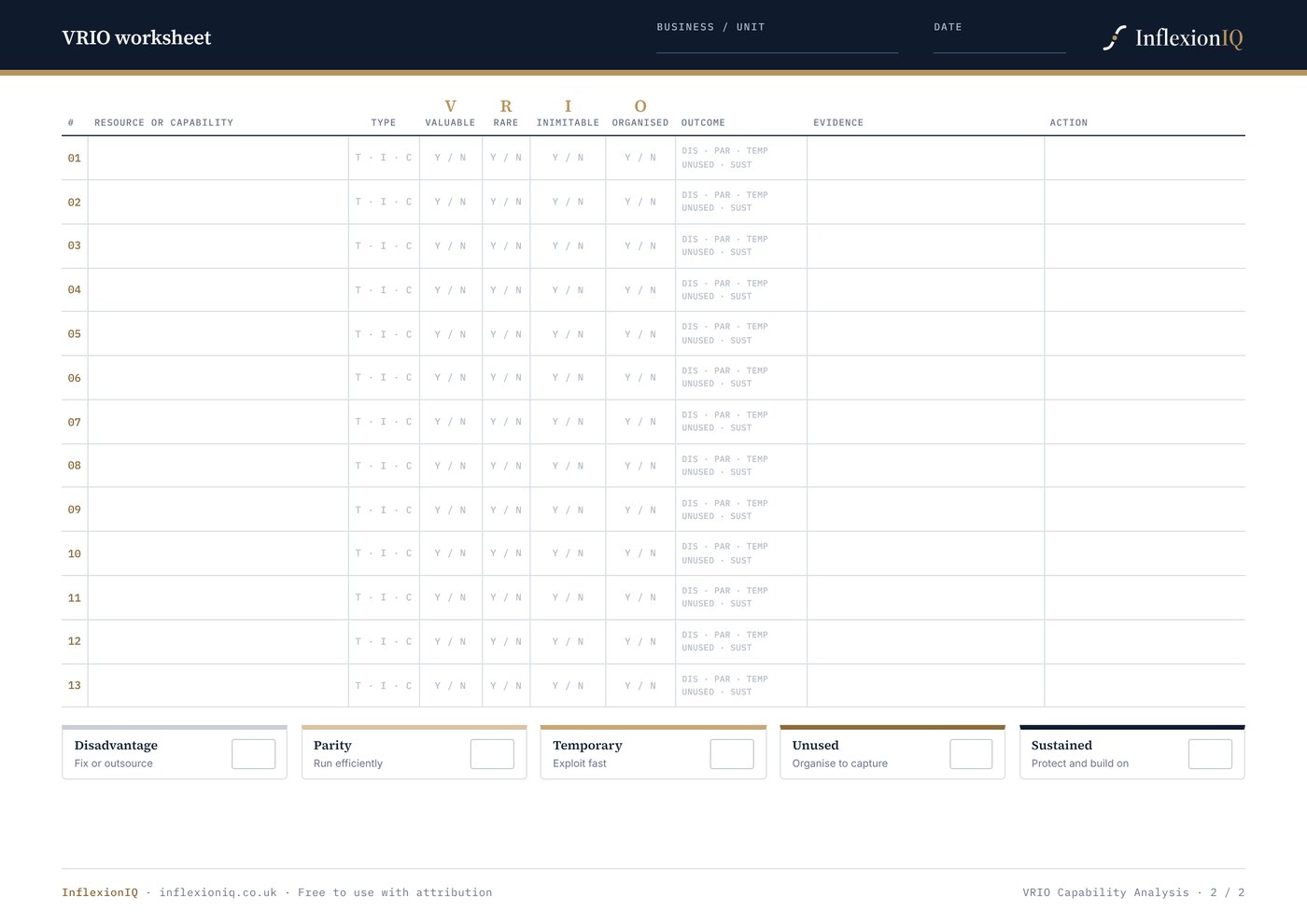
- Use the Excel version to record the answers and see the outcomes for the whole list at once.
- Decide what to protect, what to build, and what to stop investing in as if it were a differentiator.
Try it here
Answer the four questions for each capability, in order. The outcome updates as you go. Two of the lender's capabilities are filled in.
Nothing you enter here leaves your browser. Download the template to keep your work.
When it helps
- Building or refreshing a strategy
- Deciding what to keep in-house and what to outsource or partner on
- Assessing an acquisition target or a new market entry
- Prioritising investment in capabilities
What is inside
- The four questions, each with a practical test
- The five outcomes and what to do about each
- A worksheet for up to 20 resources and capabilities
- In Excel, drop-downs, automatic outcomes and recommended moves, and a summary count
Worked example
The executive team tested six capabilities they had always called strengths.
| Specialist underwriting for complex incomes | Valuable, rare, hard to copy and well organised. Sustained competitive advantage. |
|---|---|
| Broker relationships | Valuable, but every lender has them. Competitive parity. |
| Local reputation and branches | Valuable and fairly rare, but costly to run and not linked to the broker channel. Temporary advantage. |
| Customer data | Valuable and rare, but split across mortgage and savings systems, and nobody owns it. Unused advantage. |
| Core banking system | Necessary, not rare. Parity at best, and a constraint on speed. |
What happened next. The lender decided to protect its underwriting expertise and make it faster, instead of competing on price.
Preview
Questions
What does VRIO stand for?
Valuable, Rare, Inimitable (costly to imitate) and Organised. Developed by Jay Barney, the framework tests whether a resource or capability can give an organisation a sustained competitive advantage.
What is an unused competitive advantage?
A capability that is valuable, rare and hard to copy, but which the organisation is not set up to exploit. Fixing the structure, processes or incentives around it is often the quickest strategic win.
Rate and review
How useful was this template?
Your rating and comments help me improve the template and decide what to build next. It takes less than a minute.
Thank you.
Your feedback has been sent. If you have got another minute, share the template with someone who'd find it useful.
More templates
All templates →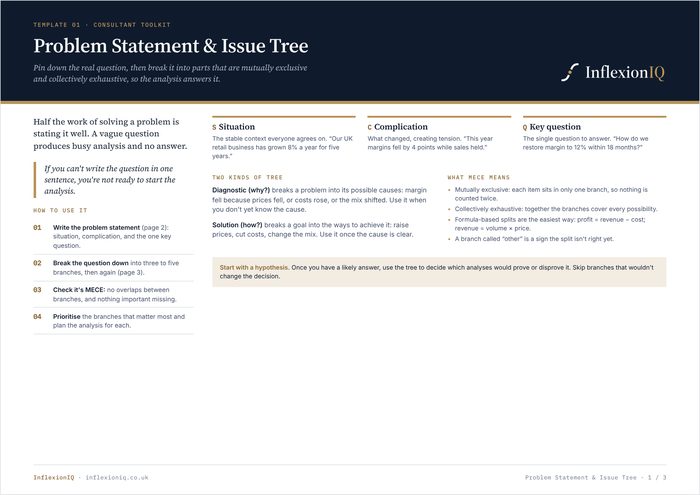
Problem Statement & Issue Tree
Pin down the real question, then break it into parts that are mutually exclusive and collectively exhaustive, so the analysis answers it. PowerPointPDFView and download →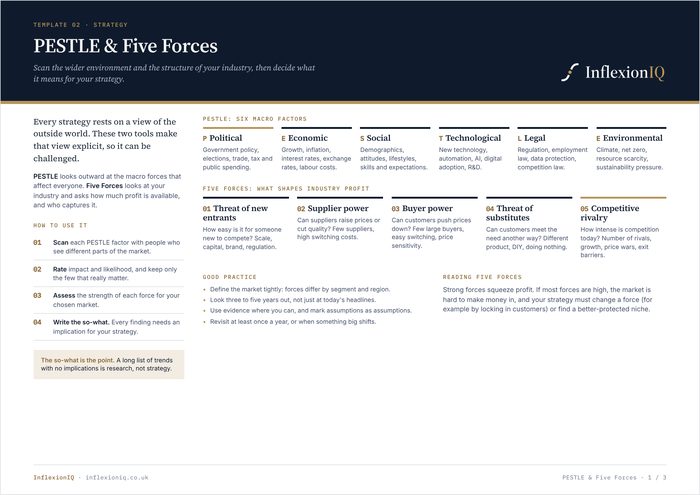
PESTLE & Five Forces
Scan the wider environment and the structure of your industry, then decide what it means for your strategy. PowerPointExcelPDFView and download →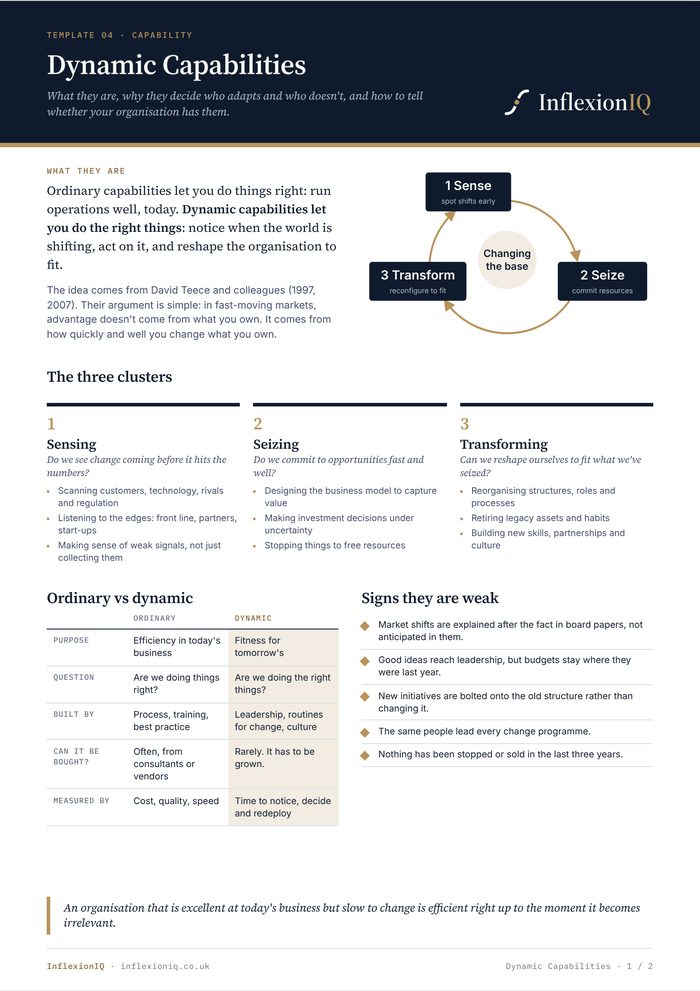
Dynamic Capabilities
What they are, why they decide who adapts and who does not, and a self-assessment to find out whether you have them. ExcelPDFView and download →Need something different? Request a template →