Problem Statement & Issue Tree
Pin down the real question, then break it into parts that are mutually exclusive and collectively exhaustive, so the analysis answers it.
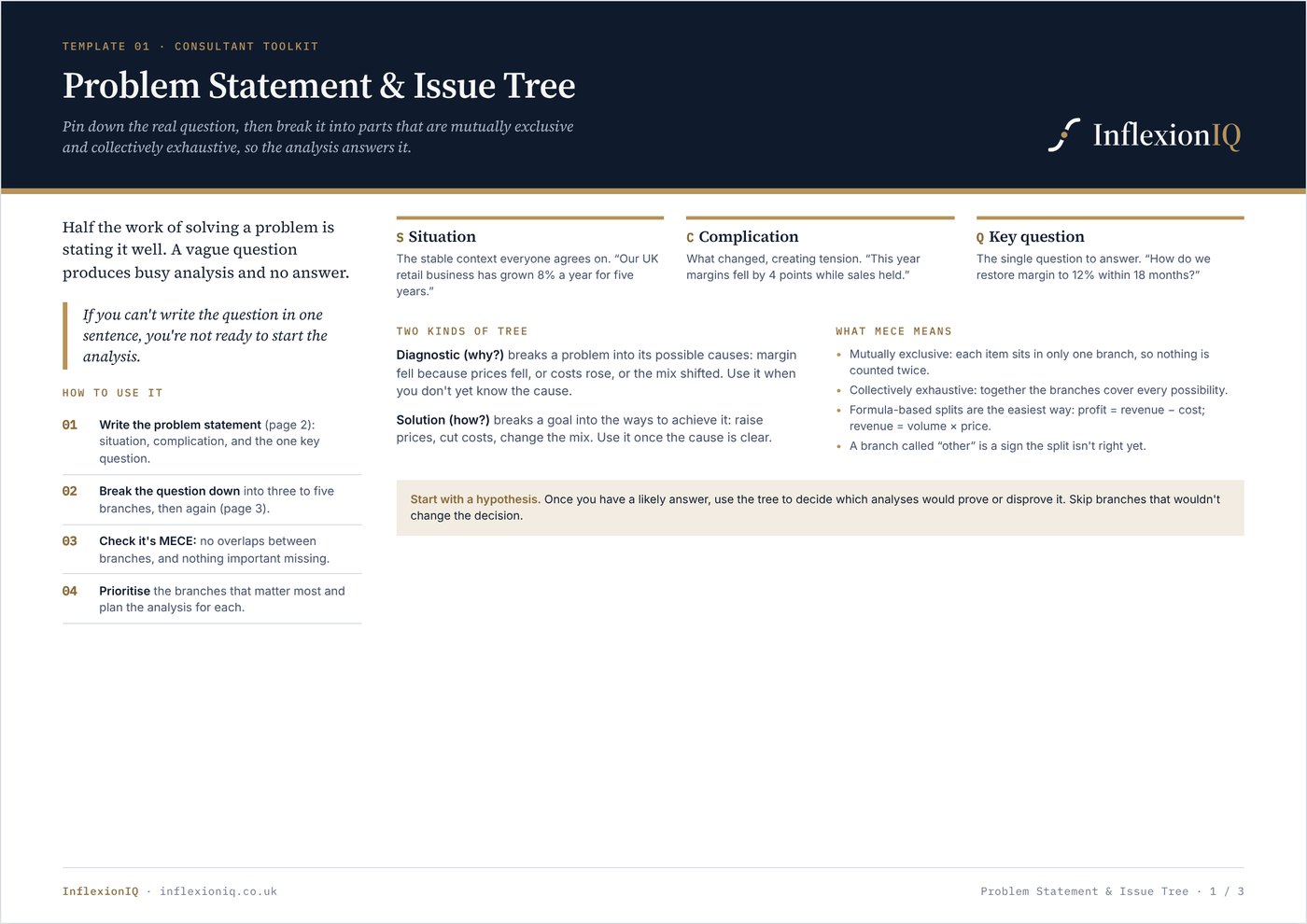
Where it fitsStage 1 of 7 · Diagnose: Where are we, and what is the real problem?
What it is
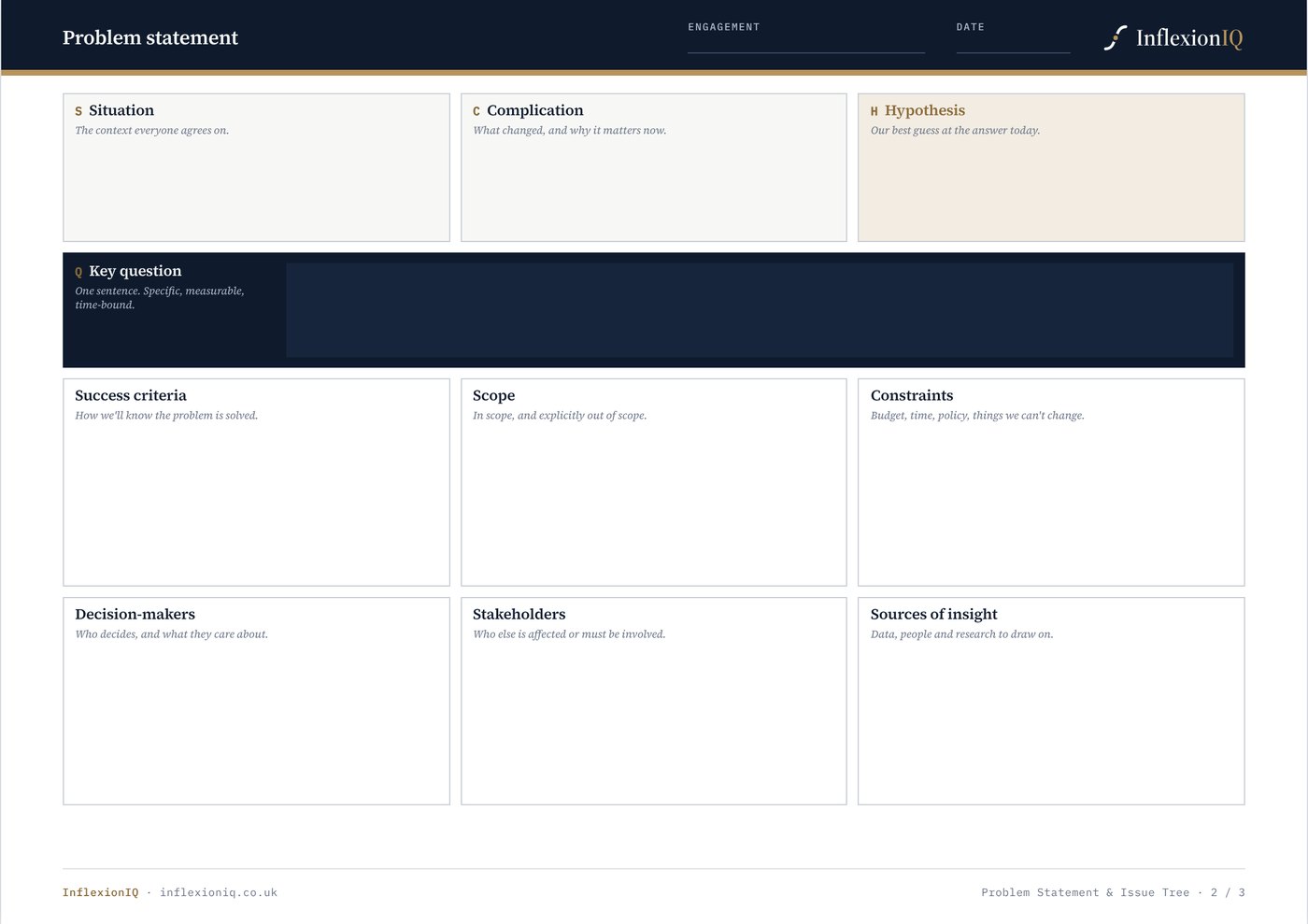
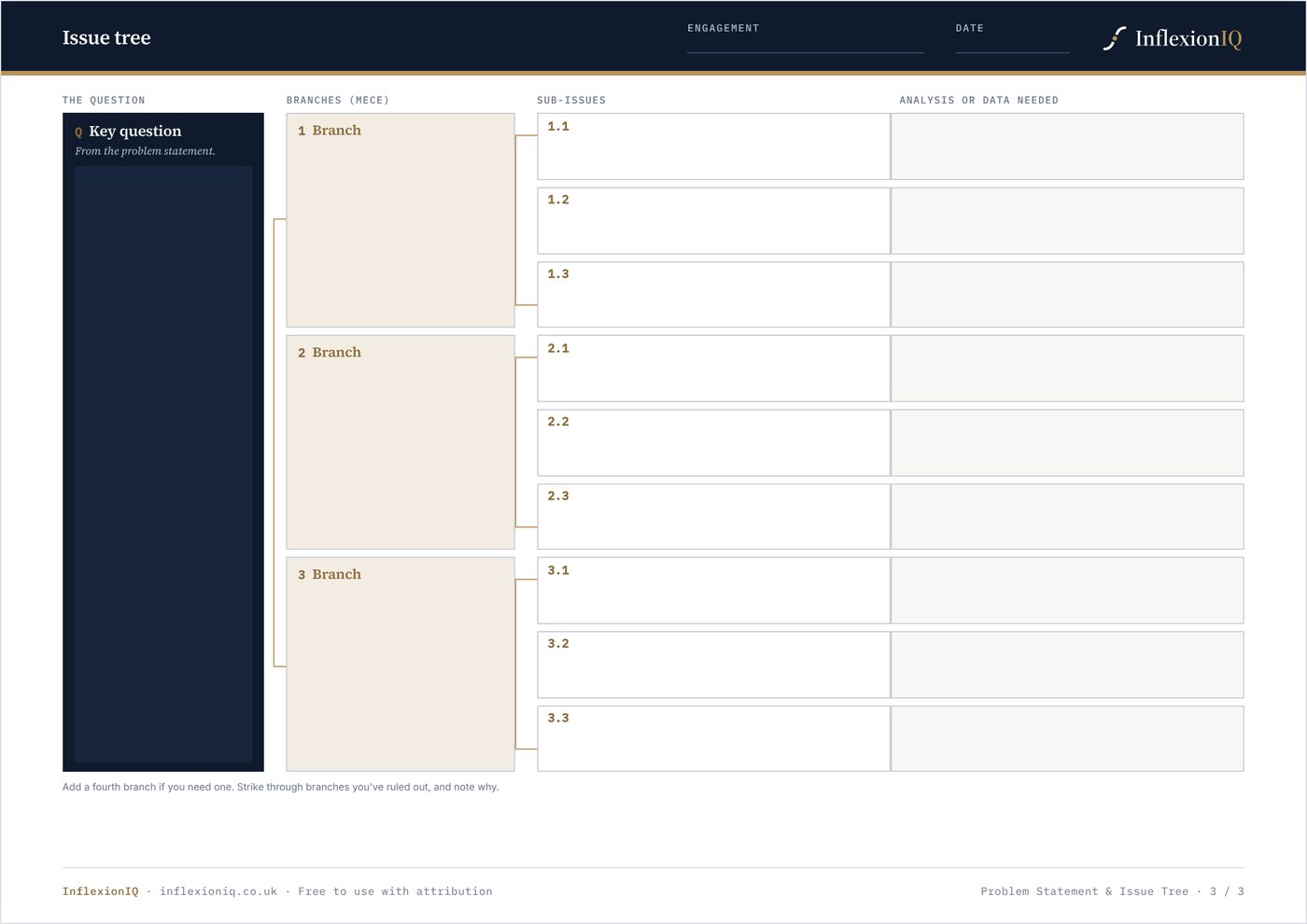
A two-step kit for defining a problem before anyone starts solving it. The problem statement page captures the situation, complication, hypothesis and key question, with success criteria, scope, constraints, decision-makers and sources of insight. The issue tree page breaks the question into MECE branches and sub-issues, with the analysis or data each one needs.
Why use it
Teams lose weeks answering the wrong question, or the right one in a way nobody can act on. A tight problem statement and a MECE tree keep the analysis focused, make gaps and overlaps visible, and let you split the work across a team with confidence.
How to use it
- Write the situation: the stable context everyone agrees on, in one or two sentences.
- Add the complication: what changed and why it matters now. Then write the key question in one sentence, specific and time-bound.
- Fill in success criteria, scope, constraints and who decides, so the team knows what a good answer looks like.
- Break the question into three to five branches, then again into sub-issues. Formula splits such as revenue minus cost are the easiest way to stay MECE.
- Check for overlaps and gaps, then note the analysis each branch needs. Skip branches that would not change the decision.
When it helps
- Kicking off a transformation, review or consulting engagement
- Resetting a project that has drifted into analysis for its own sake
- Briefing a team before splitting the analysis between them
- Testing whether a board question is specific enough to answer
What is inside
- A guide to framing the question and building a MECE tree
- A problem statement canvas, from situation to decision-makers
- An issue tree from key question to branches, sub-issues and the analysis each needs
Worked example
The running example is a made-up mid-sized UK lender: about 400,000 mortgage and savings customers, 1,200 staff, and most of its mortgages arranged through brokers. I follow it through every template.
| Situation | A steady, well-trusted lender. Ten years of modest growth, mostly through mortgage brokers. |
|---|---|
| Complication | Cost-to-income has risen from 58% to 66% in two years, and its share of broker mortgages is falling. |
| Key question | How do we bring cost-to-income back below 58% within two years, without harming customer outcomes? |
| Branch 1: Income | Has competition for savings squeezed our margin? Analysis: margin by product, year on year. |
| Branch 2: Operating cost | Where does the cost of running the business sit? Analysis: cost per mortgage, by step in the process. |
| Branch 3: Volume | Why are brokers sending us fewer cases? Analysis: broker surveys and time to a decision. |
| Branch 4: Regulation | How much has Consumer Duty and other regulation added? Analysis: change and compliance costs. |
What happened next. One cause sat behind two branches. Manual mortgage processing took 21 days per case. It drove up cost, and it sent brokers to faster lenders.
Preview
Questions
What is an issue tree?
A way of breaking one question into smaller questions that are mutually exclusive and collectively exhaustive (MECE). Answering every branch answers the original question, and nothing is counted twice.
Should I start with the issue tree or the problem statement?
The problem statement. If the question is vague, the tree will be too. Agree the decision-maker, the measure of success and the deadline first, then build the tree.
Rate and review
How useful was this template?
Your rating and comments help me improve the template and decide what to build next. It takes less than a minute.
Thank you.
Your feedback has been sent. If you have got another minute, share the template with someone who'd find it useful.
More templates
All templates →
PESTLE & Five Forces
Scan the wider environment and the structure of your industry, then decide what it means for your strategy. PowerPointExcelPDFView and download →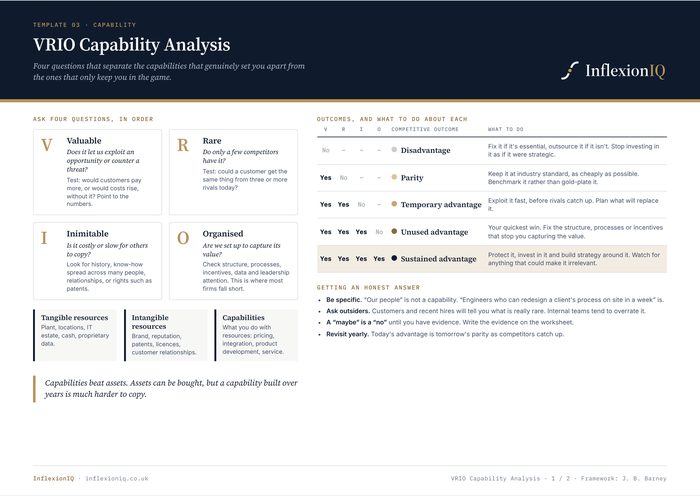
VRIO Capability Analysis
Four questions that separate the capabilities that set you apart from the ones that only keep you in the game. ExcelPDFView and download →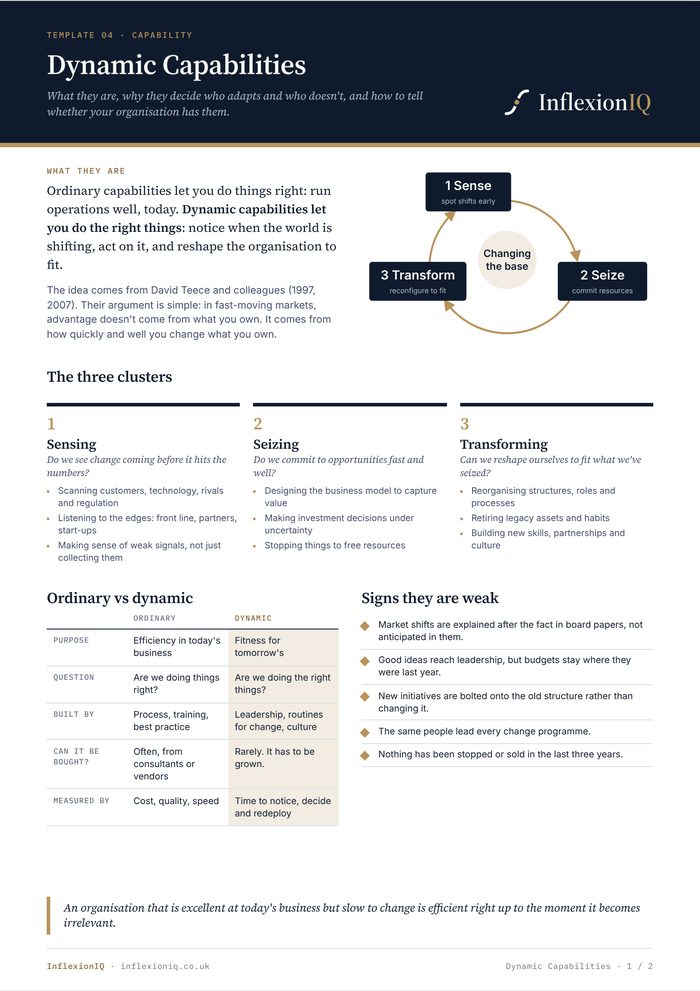
Dynamic Capabilities
What they are, why they decide who adapts and who does not, and a self-assessment to find out whether you have them. ExcelPDFView and download →Need something different? Request a template →