Stage-Gate Funding Scorecard
Fund new ideas in stages, with a little money to learn, more as evidence builds, and a clear decision at every gate.
Where it fitsStage 4 of 7 · Prioritise & fund: What do we do first, and is it worth it?
What it is
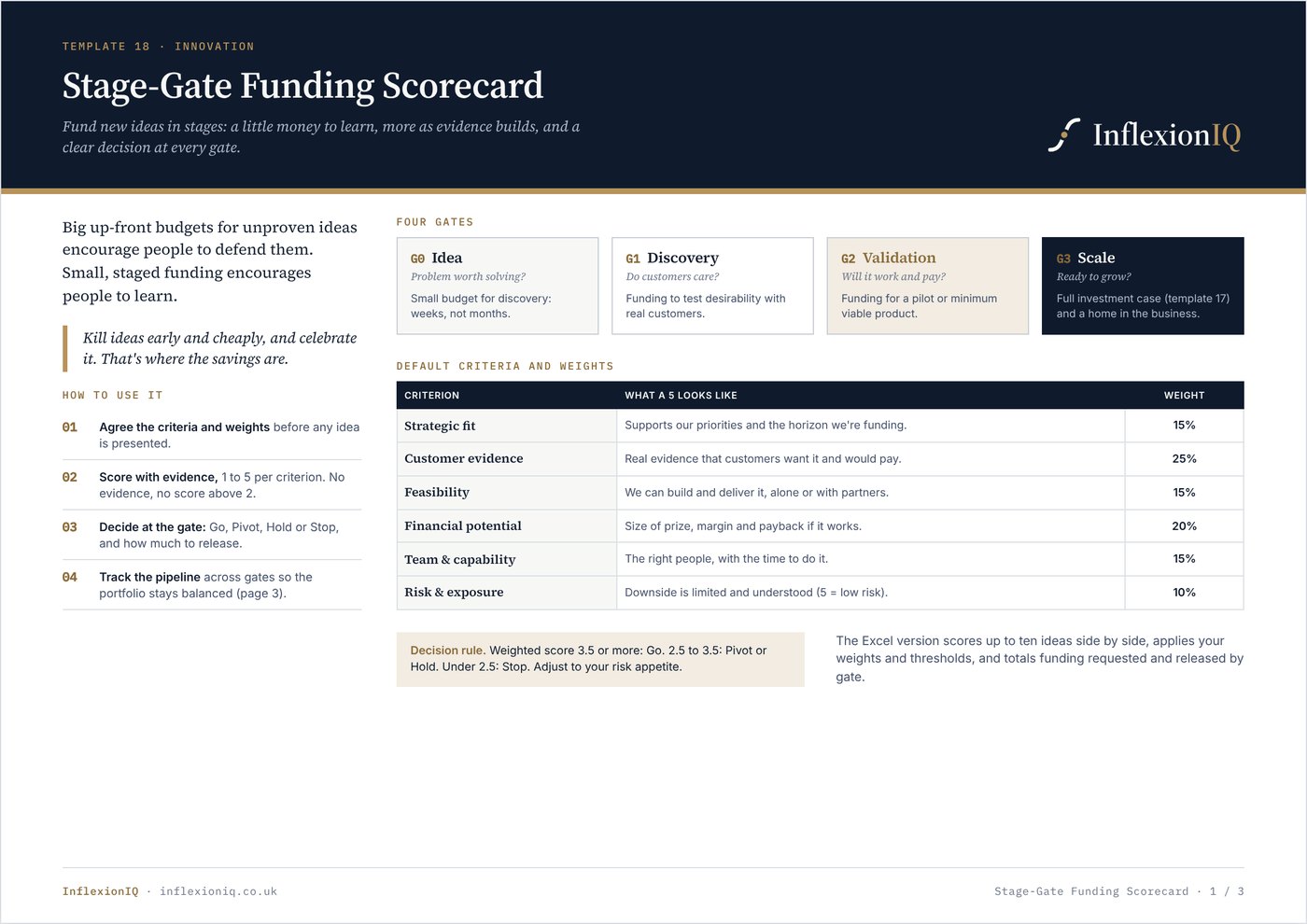
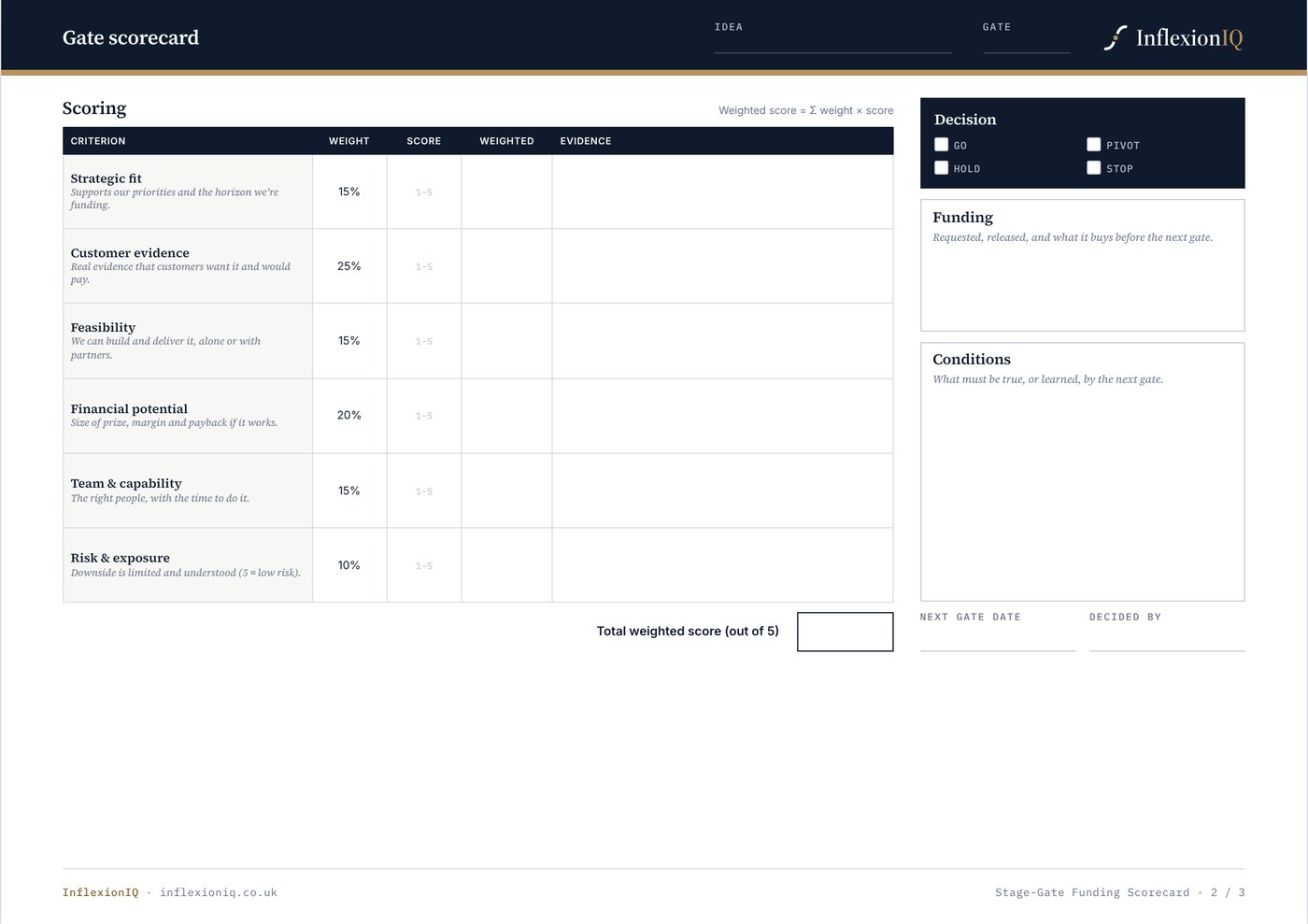
A gate-review kit for innovation and change portfolios. The guide sets out the stages, what evidence each gate needs and how much to fund. The scorecard rates an idea on six weighted criteria. The Excel workbook scores up to ten ideas, applies go and stop thresholds and keeps a pipeline view.
Why use it
Big upfront funding makes it hard to stop ideas that are not working. Funding in stages, with criteria agreed in advance, puts money behind evidence and makes stopping a normal, healthy outcome.
How to use it
- Agree the stages and what evidence each gate needs before any idea is reviewed.
- Score the idea from 1 to 5 on the six weighted criteria, with the evidence for each score.
- Let the weighted score suggest go, pivot or stop: 3.5 or above is go, below 2.5 is stop.
- Release only the money needed to reach the next gate.
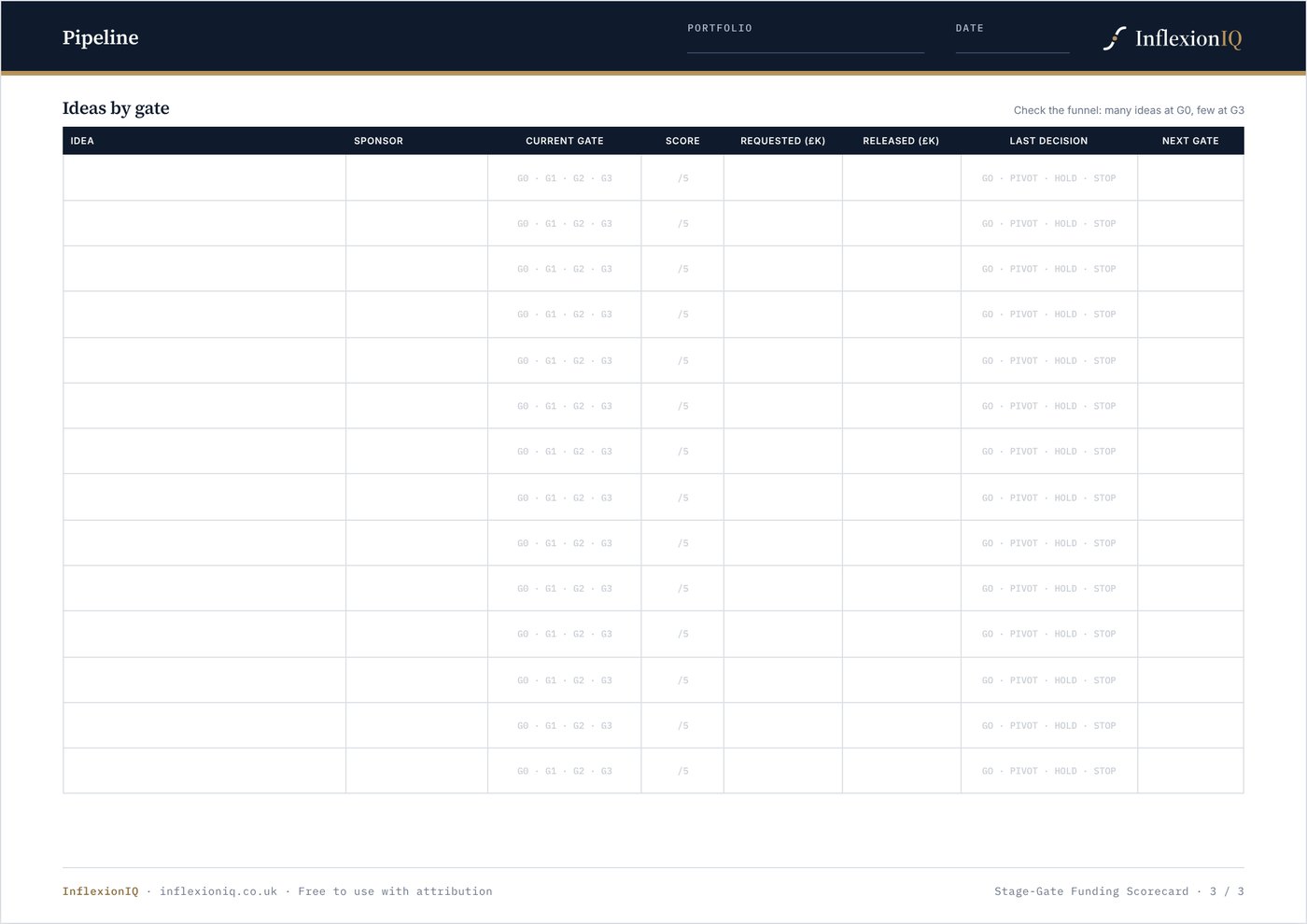
- Track every idea in the pipeline view and check that the funnel narrows as ideas move through the gates.
Try it here
Score an idea from 1 to 5 on each criterion. The weighted score and the gate decision update as you go. The sliders start at the lender's savings-offers example.
Nothing you enter here leaves your browser. Download the template to keep your work.
When it helps
- Running an innovation pipeline or venture board
- Deciding which pilots get scaled
- Replacing annual all-or-nothing funding for new ideas
- Bringing consistency to gate reviews across teams
What is inside
- A guide to stages, gates and metered funding
- A scorecard with six weighted criteria and descriptions
- An Excel scorer for ten ideas with go, pivot and stop flags
- A pipeline view of where each idea sits
Worked example
The savings team asked the innovation panel for money to build personalised offers.
| Strategic fit (15%) | 4. Supports the priority to keep savers and grow deposits. |
|---|---|
| Customer evidence (25%) | 3. Customers like the idea in research, but there is no live test yet. |
| Feasibility (15%) | 2. Needs a single customer view that does not exist yet. |
| Financial potential (20%) | 4. Could keep £40m of deposits a year that would otherwise leave. |
| Team (15%) and risk (10%) | 3 and 3. |
| Weighted score | 3.2 out of 5: pivot or hold. £40k released to prove the data can be joined up. |
What happened next. Funding in small steps meant the panel did not have to choose between yes and no. It paid for the riskiest question first.
Preview
Questions
What is metered funding?
Releasing money for a new idea in stages, with a small amount to learn first and more as evidence builds. It limits the cost of failure and keeps teams focused on the riskiest questions.
What should happen at a gate?
A clear decision: go, pivot or stop. The scorecard rates the idea on six weighted criteria, and agreed thresholds stop the conversation turning into a debate about opinions.
Rate and review
How useful was this template?
Your rating and comments help me improve the template and decide what to build next. It takes less than a minute.
Thank you.
Your feedback has been sent. If you have got another minute, share the template with someone who'd find it useful.
More templates
All templates →
2x2 Prioritisation Matrix
Score value and effort against agreed criteria, plot the results, and make the hard calls the chart makes visible. PowerPointExcelPDFView and download →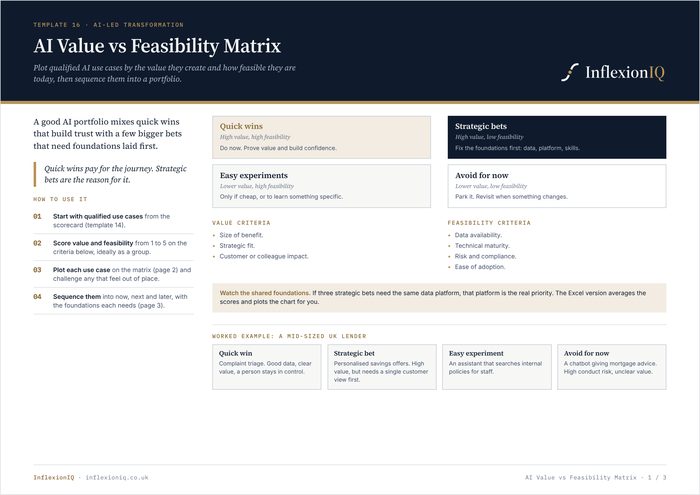
AI Value vs Feasibility Matrix
Plot qualified AI use cases by the value they create and how feasible they are today, then sequence them into a portfolio. ExcelPowerPointPDFView and download →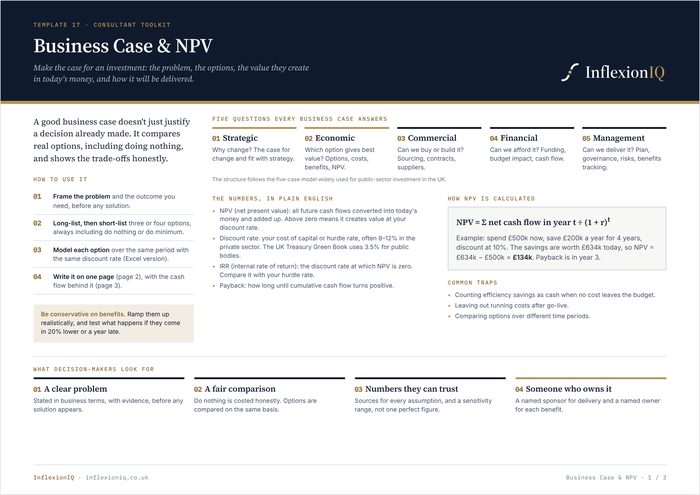
Business Case & NPV
Make the case for an investment, from the problem and the options to the value they create in today's money and how it will be delivered. PowerPointExcelPDFView and download →Need something different? Request a template →